Found mold and want it looked at today? MoldGone provides inspections and mold remediation across DC, Maryland, and Northern Virginia. Call 240.970.6533 or schedule an inspection.
You moved a box in the basement, or pulled back the shower curtain, or looked behind the dresser on the exterior wall, and there it is.
The instinct is to grab a spray bottle and start scrubbing. Resist that instinct for about ten minutes and read this first, because the most common way a small mold problem becomes a large one is a homeowner disturbing it before anyone knows how far it goes.
Here’s what to do, and just as importantly, what not to do, in the first day.
The Short Answer
- Don’t touch it, scrub it, or spray it. Disturbing mold sends spores airborne.
- Don’t use bleach. On porous material it doesn’t solve the problem.
- Close off the room and shut off HVAC to that area if you can.
- Find the water. Mold is a symptom, not the disease.
- Photograph everything before anything changes.
- Move vulnerable household members out of that space.
- Get it assessed so you know the actual extent before deciding anything.
Now the detail.
Step 1: Leave It Alone
This is the one that matters most, and it’s the opposite of what everyone wants to do.
Mold colonies release spores when they’re disturbed. Scrubbing, wiping, spraying, or knocking into a colony takes a problem that was contained to one surface and distributes it through the air, into the HVAC return, and onto surfaces in rooms that were previously fine. People routinely turn a bathroom problem into a whole-floor problem in the fifteen minutes before they call anyone.
It also destroys information. The pattern, location, and extent of visible growth tell an assessor where the water is coming from. Scrub it off and that diagnostic trail is gone, but the moisture source that created it is still there, which means it comes back.
Leave it exactly as you found it until someone has looked at it.
Step 2: Put Down the Bleach
Bleach is the default American response to mold and it is largely the wrong tool.
On hard, non-porous surfaces like glazed tile, glass, or sealed countertops, bleach can kill surface growth. That’s a legitimate use.
On porous material, which is most of what your house is made of, it doesn’t work the way people assume. Drywall, wood framing, insulation, carpet, and grout absorb water. Bleach is mostly water. It removes the visible staining on the surface while wetting the material underneath, and the growth continues below where you can see it. You end up with a wall that looks clean and a problem that’s still active.
If the surface is porous and the growth is more than trivial, cleaning it yourself is not the answer.
Step 3: Contain the Area
You’re trying to keep the problem where it is until it can be assessed.
- Close the door to the affected room, and keep it closed.
- Shut off HVAC to that zone if your system allows it. If the return or the air handler is in the affected space, such as a basement or an attic, shut the system down entirely. Running it circulates spores through every room in the house. This is the single fastest way a localized problem becomes a whole-house problem.
- Don’t set up a box fan to “air it out.” You’ll push spores into adjacent rooms.
- Leave the dehumidifier running if you already have one and it’s in a space you’re not trying to isolate. Lowering humidity doesn’t spread anything and it slows growth.
DMV note: This step matters more here than in a lot of the country because of how homes in this region are built. Finished basements in suburban Maryland split-levels and vented crawl spaces across Northern Virginia frequently house the air handler in the same space as the moisture problem. If your system is down there, turning it off is the highest-value thing you can do in the first hour.
Step 4: Find the Water
Mold is not the problem. Mold is what grows because of the problem.
Every mold colony in your house exists because something is wet and stayed wet. If the moisture source isn’t corrected, remediation is temporary and the growth returns in the same place. So before anything else, start looking for where the water is coming from.
Common sources, roughly in the order we find them:
- A plumbing leak, often a slow one behind a wall, under a sink, or at a supply line to a toilet, dishwasher, or refrigerator
- Foundation seepage or a crack, especially after heavy rain and especially in below-grade finished space
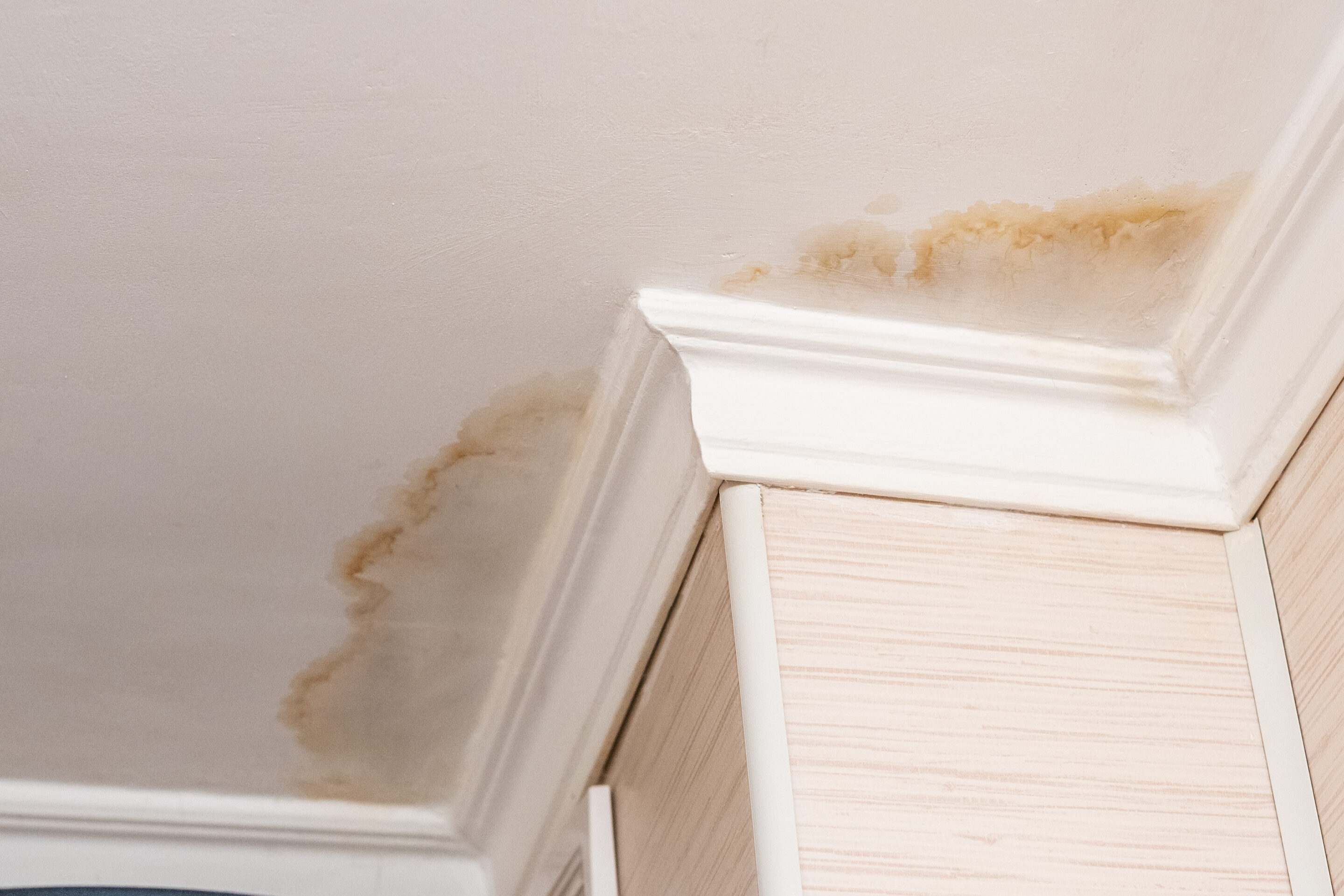
- A roof leak, which frequently shows up on a ceiling or in an attic well away from where the roof is actually failing
- Condensation, on windows, on cold water pipes, or on exterior walls behind furniture
- Bathroom ventilation that doesn’t work, either because there’s no exhaust fan or because it vents into the attic instead of outside
- Grading and gutters, where water is being delivered to the foundation instead of away from it
If you can identify and stop an active leak in the first 24 hours, do it. That’s the one piece of hands-on work worth doing immediately.
Step 5: Document It
Take photos and video before anything is touched, moved, cleaned, or repaired.
- Wide shots showing the room and where the growth sits in it
- Close shots of the growth itself
- The suspected water source, if you found it
- Any affected belongings
- A note of the date you discovered it
If this turns into an insurance conversation, the documentation you take before cleanup is worth considerably more than anything you take after. Policies also generally expect you to take reasonable steps to prevent further damage once you know about a problem, so the timeline of when you found it and when you acted is worth having written down.
Step 6: Think About Who’s in the House
Mold affects people unevenly. Reactions vary widely, and plenty of healthy adults notice nothing at all in a house where someone else is clearly reacting.
Give particular thought to infants and young children, older adults, anyone who is immunocompromised or undergoing treatment that suppresses immune function, anyone with asthma or a chronic respiratory condition, and anyone with a known mold allergy. Pets too, since animals spend more time at floor level and often show respiratory or skin symptoms before people do.
If someone in one of those categories sleeps in or spends significant time in the affected room, move them to another part of the house for now. That’s a reasonable precaution, not an overreaction.
Do you need to leave the house? Usually not, for a contained problem in one room. It’s a real question for extensive growth, for a sewage-related water event, or where someone in the household is medically vulnerable. That’s a call to make with an assessment in hand and, where health is a factor, with a doctor.
Step 7: Get It Assessed
Here’s the reason this step exists: you cannot tell how big a mold problem is by looking at the part you can see.
Visible growth on a wall is frequently the edge of something larger inside the cavity. The purpose of an assessment is to find the moisture source, determine how far the affected area actually extends, and identify what has to come out versus what can be cleaned and dried. Without that, you’re guessing at scope, and every decision after that is a guess too.
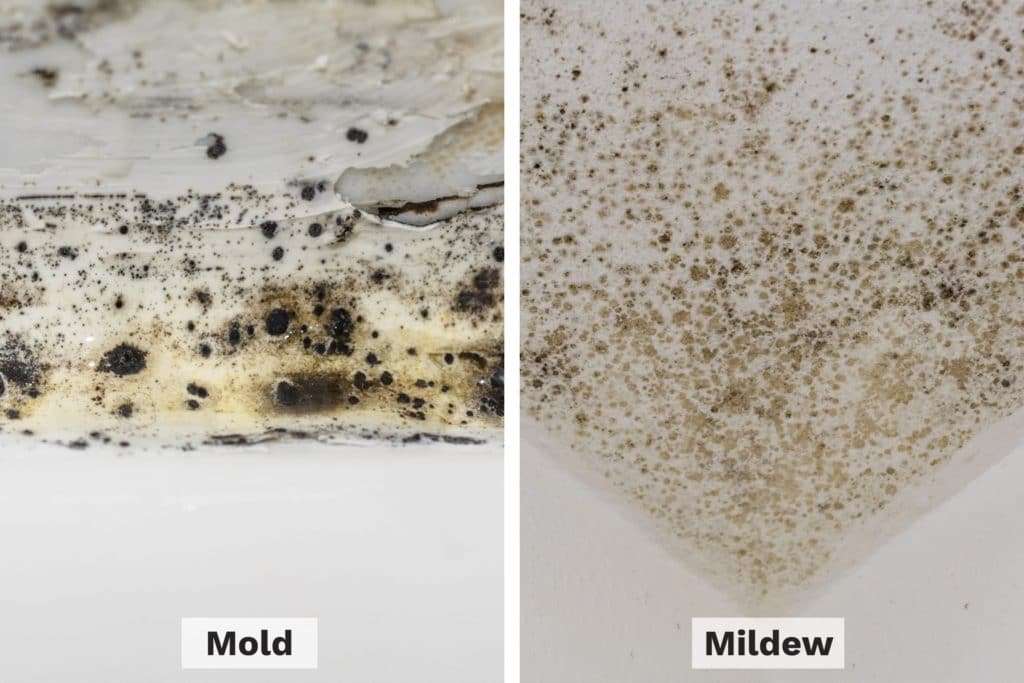
What about small patches? The EPA’s general guidance is that homeowners can often handle mold covering less than about 10 square feet, roughly a 3 foot by 3 foot area, on hard non-porous surfaces. Surface mildew on shower tile is genuinely a homeowner job.
Beyond that threshold, or on any porous material, or anywhere you can smell mold but not see it, or where there’s been standing water, that’s when to bring someone in. And if you do clean a small patch yourself, wear an N-95 respirator, gloves, and eye protection, and don’t do it at all if you’re in one of the sensitive groups above.
What Not to Do in the First 24 Hours
- Don’t scrub, spray, or sand it. Sanding drywall with growth on it is the worst version of this.
- Don’t paint over it. Mold grows through paint, and if you sell the house later, painted-over growth is a problem you’ve made worse rather than solved.
- Don’t run the HVAC if the affected space contains the system or its return.
- Don’t rip out drywall before anyone has assessed it. Uncontrolled demolition spreads spores through the whole house.
- Don’t throw anything away before photographing it.
- Don’t assume it dried out and is now fine. Dormant growth reactivates when moisture returns, and the moisture will return until the source is fixed.
The Bottom Line
The first 24 hours are about containment and information, not cleanup. Leave the growth undisturbed, close the space off, shut down HVAC if the system is in it, stop any active leak, photograph everything, and get eyes on it before you decide what happens next.
The homeowners who end up with the smallest, cheapest, fastest remediations are almost always the ones who did nothing except isolate the area and make a phone call.
MoldGone handles assessment and remediation across DC, Maryland, and Northern Virginia, including identifying the moisture source, containing and removing affected material, and verifying the area is clear when the work is done.
Found mold and not sure what you’re looking at? Call MoldGone at 240.970.6533 or schedule an inspection.
General guidance on homeowner cleanup thresholds and protective equipment references EPA recommendations on mold in homes. Any specific situation should be evaluated on site.