Found water after a storm? MoldGone assesses and repairs storm-related water damage across DC, Maryland, and Northern Virginia. Call 240.970.6533 or schedule an inspection.
The storm passes, the power comes back, the tree limb gets dragged to the curb, and the house looks fine.
That’s the problem. Most storm water intrusion in the DMV is not dramatic. It’s a faint ceiling stain in a back bedroom. A damp spot above a window that dries by Tuesday and comes back in October. A crawl space with two inches of water that nobody has opened in three years.
EPA guidance is that mold can begin developing on wet materials within roughly 24 to 48 hours. Water that got in during the storm and didn’t get found becomes a mold problem before most people think to look. That first 48 hours is the window where you still have easy options.
Here’s what to check, in order, and what to do if you find something.
The Short Answer
- Safety first. Standing water near electrical, any gas odor, or visible structural damage means you stop and call for help before inspecting anything.
- Start at the top and work down. Water travels. What shows on a ceiling started somewhere above it.
- Check the places nobody goes. Attic, crawl space, back of the basement, behind stored boxes.
- Photograph anything wet before you touch it.
- Do not run HVAC if the air handler or ductwork sat in water.
- Act inside the 24 to 48 hour window. That’s the whole reason this checklist exists.
Now the detail.
Stop: Safety Before Inspection
None of the checklist below matters if the house isn’t safe to walk.
- Standing water near electrical. Outlets, cords, the panel, a submerged basement. Do not step in it. If you can shut power to that area from a dry location, do it. If you can’t, call your utility or a licensed electrician. Never go down basement stairs into water to reach a panel.
- Any gas smell. Leave immediately, don’t flip switches on your way out, and call 911 and your gas utility from outside.
- Structural damage. Sagging ceilings, a bowed foundation wall, a compromised roof section, a floor that feels soft. Stay out and get a professional assessment. Water-loaded drywall and insulation are far heavier than people expect, and a bulging ceiling can come down all at once.
- Contaminated floodwater. Storm water that ran across the ground picks up whatever it crossed: fuel, fertilizer, pesticides, animal waste, sewage. Keep kids and pets out of it.
- Downed lines and unstable trees Assume every downed line is live and call the utility.
If any of those are present, the checklist waits.
Why 48 Hours
Two clocks are running. The first is mold. EPA guidance is that mold can begin developing on wet materials within 24 to 48 hours, and a Mid-Atlantic summer supplies the warmth for free. Material that got wet Thursday night is inside that window by Saturday.
The second is the water itself. Storm water that came in at ground level or blew in as wind-driven rain is treated as grossly contaminated, which changes what can be dried and what has to be removed. See our post on water damage categories for that breakdown.
Find it inside two days and you’re usually talking about drying and a limited repair. Find it in three weeks and you’re opening walls. Anything past the 48 hour mark isn’t hopeless, it just means assume growth has started and treat it accordingly.
The Checklist
Work top to bottom. Bring a flashlight, your phone for photos, and a notepad. Print this section and carry it around the house.
1. Attic and Roof (from inside)
- Roof sheathing: dark staining, streaking, or wet-looking patches on the underside of the decking. Fresh water damage looks darker than the surrounding wood.
- Around penetrations: vents, the chimney chase, plumbing stacks, skylights, and bath fan ducts. Penetrations fail before fields of shingles do.
- Insulation: compressed, matted, or discolored patches mean water came through above them. Feel for damp with a gloved hand.
- Daylight: any visible light through the roof deck is an active opening.
- Fasteners: rust streaks or dark rings around nail points.
2. Ceilings and Upper Walls
- New staining anywhere, especially rings with a defined edge.
- Bubbling, blistering, or peeling paint.
- Sagging or bowed drywall, which means the material is loaded with water.
- Nail pops or seams that suddenly look different.
- Closets, spare rooms, and the top of stairwells. Nobody walks into those for days.
3. Windows and Doors
- Headers: the wall directly above the frame. Wind-driven rain gets in at the top and runs down inside the wall.
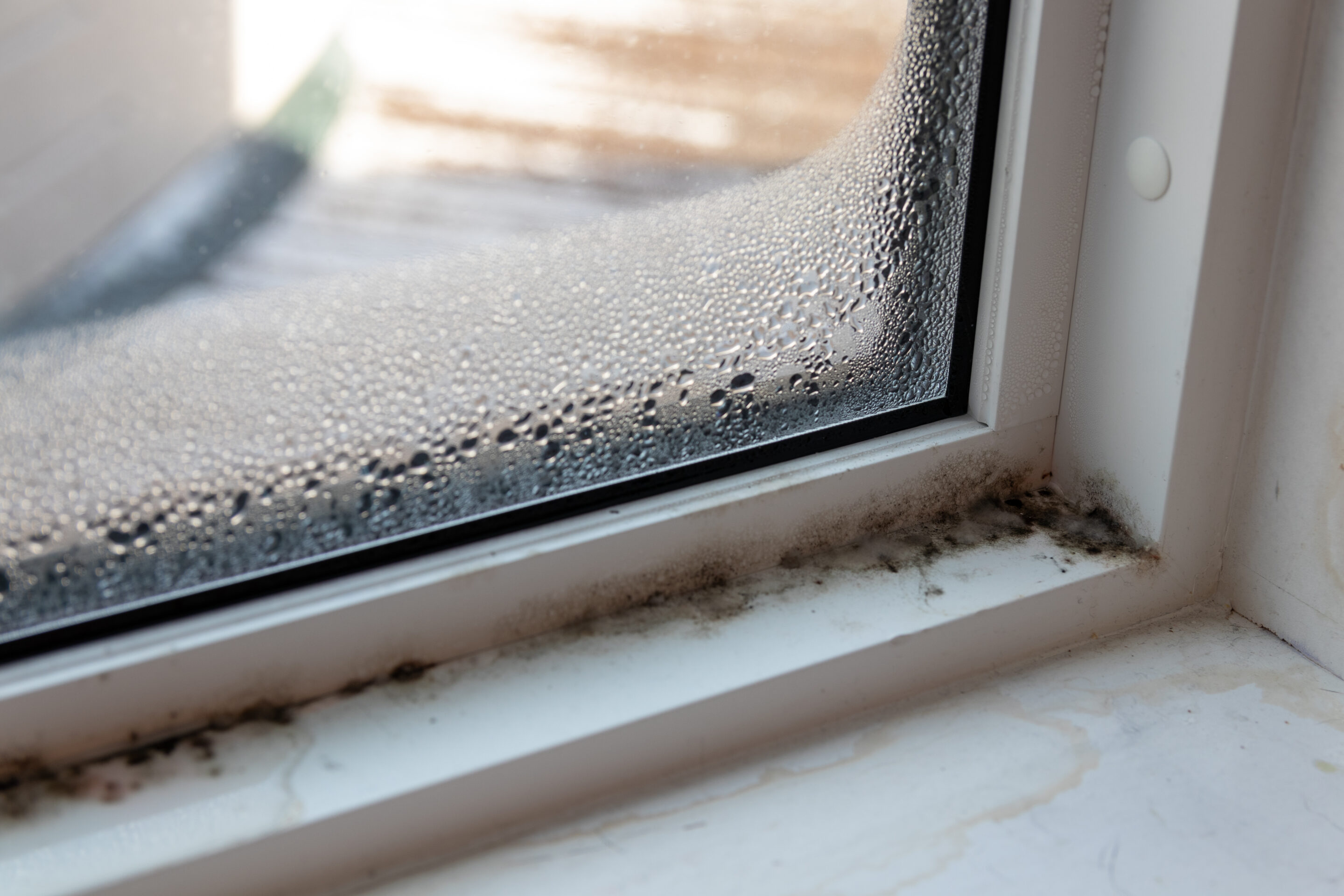
- Sills and stools: standing water, swelling, or staining at the corners.
- Caulk and glazing: cracked, separated, or missing.
- The wall below the window: damp drywall or a stain at the baseboard is a classic wind-driven rain signature.
- Sliding doors and their tracks, which hold water.
4. Basement
- Foundation walls: a horizontal water line, efflorescence (white chalky mineral deposits), or fresh staining.
- Cracks: vertical, horizontal, or stair-step, and whether anything is damp around them.
- Floor perimeter: where the slab meets the wall is where seepage shows first. Pull back carpet edges if you can.
- Sump pump: confirm it runs. Lift the float manually and listen for the pump to cycle. Then go outside and confirm the discharge line is intact, unblocked, and dumping well away from the foundation rather than back against it.
- Anything stored on the floor: cardboard wicks water upward and hides the wall behind it.
- Finished walls: baseboards for swelling, drywall for softness.
5. Crawl Space
- Standing water on the ground or on top of the vapor barrier.
- Vapor barrier displacement: shifted, torn, or floating plastic means water moved through.
- Insulation: batts that are sagging, falling, or damp. Wet insulation does not dry in place.
- Ductwork: water on top of ducts, at joints, and inside if there’s an accessible opening.
- Wood framing: joists, sill plate, and subfloor underside for staining or fuzzy growth.
- A crawl space that smells earthy or musty after a storm is telling you something.
6. HVAC
- Condensate line: confirm it’s draining and not backed up.
- Did the equipment get wet? If the air handler, furnace, or ductwork sat in water, do not run the system. You’ll push moisture and contamination into every room in the house.
- Drain pan for standing water, return plenum for dampness.
- If you’re unsure whether the system got wet, leave it off until someone looks at it.
7. Utilities and Appliances
- Water heater: the base and the pan. Rust, sediment staining, or a damp floor.
- Washer connections: supply hoses, the standpipe, and the wall behind the machine.
- Any appliance in a below-grade space that may have been standing in water. Don’t power it back on.
8. Exterior
- Gutters: overflowing, sagging, separated, or packed with debris and shingle grit.
- Downspouts: connected, intact, and extended. Walk to where each one discharges and look at the ground. Water landing within a few feet of the foundation is water going into your basement.
- Grading: soil should fall away from the house. Look for settled areas, mulch beds that trap water, and low spots still holding puddles a day later.
- Foundation: new cracks, damp patches, or soil washed away from the wall.
- Window wells: standing water, clogged drains, missing or damaged covers.
- Siding and trim: loose panels, popped nails, damaged flashing, gaps at corners where wind-driven rain enters.
- Roof from the ground: missing or lifted shingles, displaced ridge cap, damaged vent boots. Use binoculars. Don’t get on a storm-damaged roof.
DMV note: Regional housing stock decides where you’ll actually find the water. In DC and Baltimore row homes, the party wall and the flat or low-slope roof are the usual entry points, and the stain often shows up on a third-floor ceiling well away from the failure. Suburban Maryland split-levels with finished basements hide seepage behind drywall and stored boxes, so the water line on the foundation stays invisible until someone opens the wall. Northern Virginia’s vented crawl spaces take on ground water during heavy rain and go unnoticed for months, because nobody goes down there. Check the spaces your house actually has.
If You Find Water
- Photograph and video it before you touch anything. Wide shots of the room, close shots of the damage, the suspected entry point, affected belongings. Note the date. Documentation taken before cleanup is worth far more than anything after.
- Stop the entry point if you safely can. Tarp, bucket, temporary patch.
- Don’t run HVAC through a wet system.
- Don’t wade into contaminated water to clean it up. Storm water at ground level and wind-driven rain are treated as contaminated, and porous material that soaked it up generally comes out rather than getting dried.
- Don’t wait to see if it dries on its own. Surfaces dry long before the material behind them does. Wall cavities, subfloor, and insulation hold water for days, and that’s where growth starts.
- Get it assessed inside the growth window. Moisture meters and thermal imaging find water inside walls and under floors that you cannot see or feel. That’s the difference between drying a wall and rebuilding it.
On insurance: policies vary widely, and storm-related water, surface flooding, and resulting mold are frequently handled under different terms and different limits. Don’t assume. Read your own policy and declarations page. Policies also generally expect you to take reasonable steps to prevent further damage once you know about a problem, so write down when you found it and when you acted.
Run This Every Time
This isn’t a once-a-season task. Repeat it after every significant storm.
The DMV gets several kinds of weather that push water into houses: severe summer thunderstorms and the occasional derecho with damaging straight-line winds, remnants of tropical systems tracking up the coast in late summer and early fall, and long soaking rains that saturate the soil until the water finds your foundation instead.
Any one of them can open a small entry point. Damage from the first storm is usually minor. Damage from the fourth, in a spot that’s been quietly wet since August, is not.
The Bottom Line
Storm damage that announces itself gets handled. Storm damage that doesn’t becomes mold.
Check safety first and stay out of anything unsafe. Then work top to bottom: attic, ceilings, windows, basement, crawl space, HVAC, appliances, exterior. Photograph anything wet before you touch it. And move inside the first 48 hours, because that’s the window where drying still works and material is still salvageable.
MoldGone handles storm-related water damage restoration, moisture assessment, and mold remediation across DC, Maryland, and Northern Virginia, including finding hidden water with moisture meters and thermal imaging, structural drying, removal of contaminated material, and verification that the space is clear when the work is done.
Found water after a storm, or not sure what you’re looking at? Call MoldGone at 240.970.6533 or schedule an inspection.
Mold growth timelines in this article reference general EPA guidance on moisture and mold in buildings. Water damage classifications follow the IICRC S500 standard. Insurance coverage varies by policy, carrier, and endorsement, so review your own policy and declarations page. Any specific situation requires on-site assessment.