Running an air purifier and still smelling mold? That usually means there’s a source the filter can’t reach. MoldGone inspects and tests indoor air across DC, Maryland, and Northern Virginia. Call (240) 970-6533 or schedule an inspection.
Air purifier sales climb every winter. The windows are shut, the heat is on, and people start noticing the air inside more. For anyone who suspects mold, a purifier feels like a reasonable first step. Plug it in, let it run, breathe easier.
It’s not a bad instinct. A good HEPA purifier does capture mold spores. But it’s worth knowing exactly what that does and doesn’t fix, because a purifier running in the corner can make a mold problem feel handled when it’s still growing.
The Short Answer
- HEPA filters do capture mold spores. A true HEPA filter is rated to capture at least 99.97% of particles at 0.3 microns, and most mold spores are larger than that.
- A purifier only cleans the air that passes through it. It can’t reach spores settled on surfaces, inside wall cavities, or in the HVAC system.
- It does nothing to the growth itself. The colony on the drywall keeps growing and releasing spores as long as it has moisture.
- Avoid ozone generators and “mold-killing” ionizers. EPA advises against using ozone generators in occupied spaces, and ozone at safe levels doesn’t remove mold.
- Purifiers are useful as support, while you’re getting a problem diagnosed, after remediation, or for people sensitive to normal outdoor spore levels. They aren’t the fix.
What a HEPA Purifier Actually Does
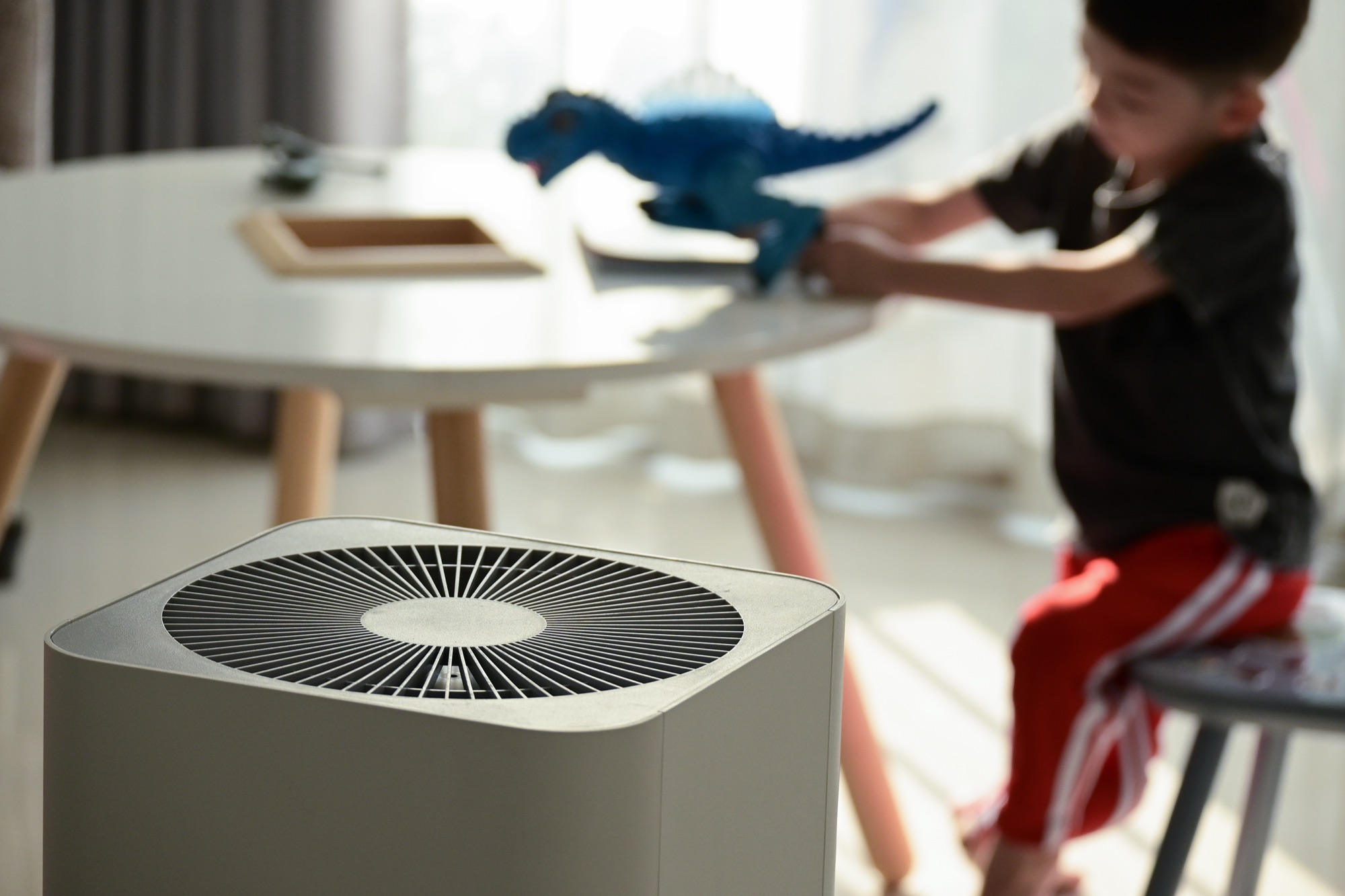
A HEPA (high-efficiency particulate air) filter is a dense mat of fibers that traps particles as air is pulled through it. To be called true HEPA in the U.S., a filter has to capture at least 99.97% of particles at 0.3 microns, which is the hardest size to catch. Larger and smaller particles are caught at even higher rates.
Most mold spores are roughly 2 to 20 microns, well within what HEPA handles. So a HEPA purifier running in a room will reduce the number of spores floating in that room’s air.
That’s real, and for someone with allergies or asthma it can make a noticeable difference in how a room feels. MoldGone uses the same principle on every remediation job: HEPA air scrubbers run inside containment to clean the air while contaminated material comes out.
What It Can’t Do
It Can’t Remove the Source
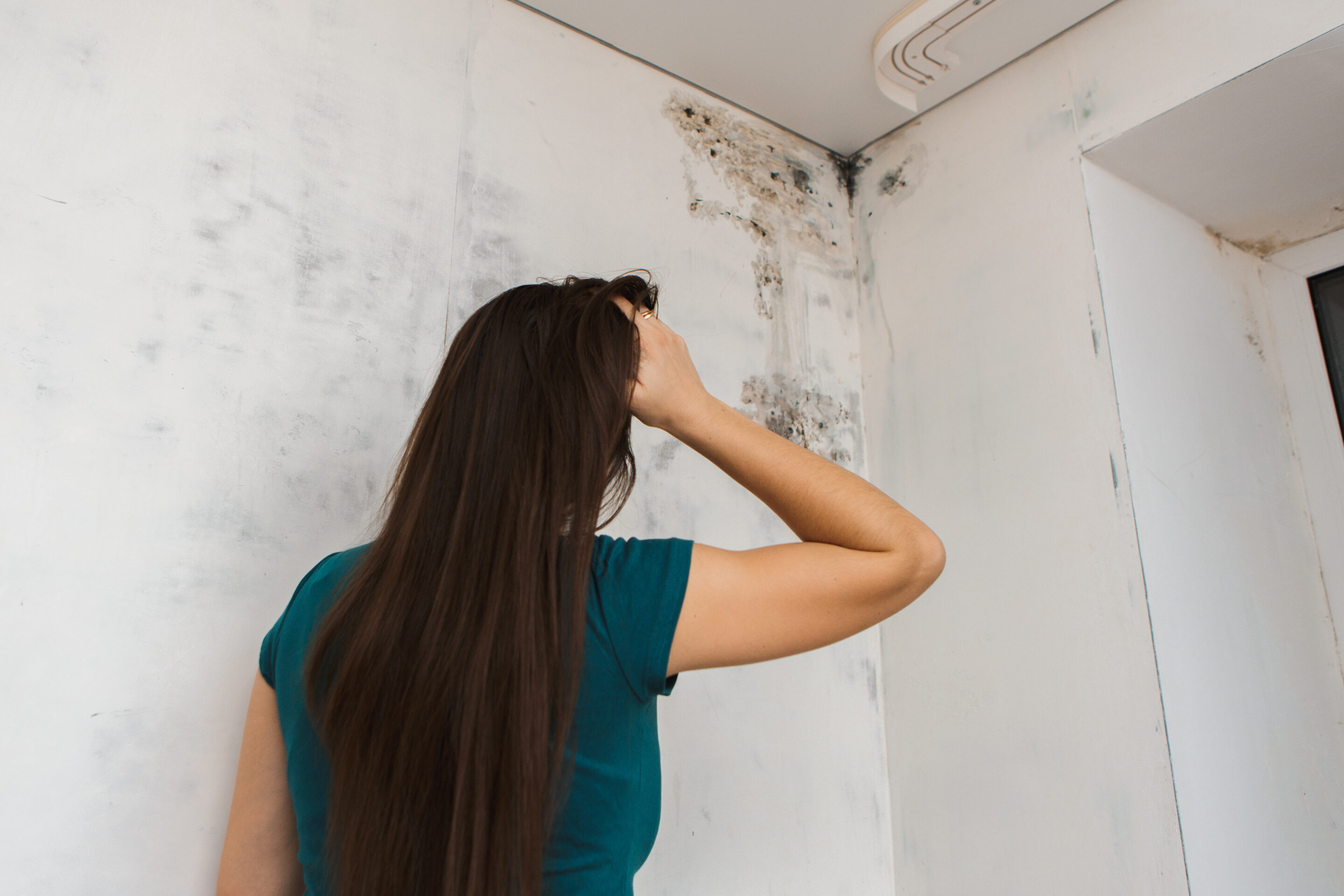
Mold growing on drywall, under carpet, or on attic sheathing doesn’t care what’s happening in the air. As long as it has moisture, it keeps growing and keeps releasing spores. The purifier catches some of them. The colony makes more.
It Can’t Reach What’s Hidden
A purifier only cleans air that moves through it. Mold inside a wall cavity, under flooring, or inside ductwork releases spores into spaces the purifier never touches. Many of those spores get into the living space eventually, but the purifier is always playing catch-up.
It Can’t Clean Surfaces
Spores and mold fragments settle onto floors, furniture, bedding, and clothes. A purifier pulls in what’s airborne. It doesn’t clean what’s already landed, and settled particles get stirred back up every time someone walks through the room.
It Doesn’t Fix the Moisture
Every mold problem is a moisture problem first. A leak, high humidity, or condensation is what started it. A purifier does nothing about any of those. Without fixing the moisture, even a full remediation won’t hold, and a purifier certainly won’t.
The Products to Avoid
Ozone generators. Some are marketed as air purifiers or as “mold killers.” EPA’s position is clear: ozone at levels safe for people doesn’t effectively remove mold or other indoor contaminants, and ozone at higher levels irritates the lungs. Don’t use them in occupied spaces.
Ionizers and some “electronic” air cleaners can produce ozone as a byproduct. If you’re buying an electronic air cleaner, look for one certified by the California Air Resources Board (CARB), which tests for ozone emissions.
“Mold-killing” claims in general. Some purifiers include UV lights or coatings and advertise that they kill mold. Even if a device kills spores that pass through it, dead mold particles can still trigger allergic and respiratory reactions. Killing spores in the air is not the same as removing mold from the house.
When a Purifier Makes Sense
Used for the right job, a HEPA purifier is worth having:
- While you’re getting an inspection scheduled, to reduce exposure in a bedroom or living area
- After remediation, as part of keeping indoor air clean once the source is gone
- For people sensitive to outdoor mold, which peaks in the DMV in late summer and fall, when spores come in through doors and windows
- In a bedroom for anyone with asthma or allergies, where it runs during the hours you spend the most time breathing that air
Buying tips: Choose a true HEPA filter, not “HEPA-type” or “HEPA-like.” Size it to the room using the CADR (clean air delivery rate) on the box. Run it continuously, not just when you notice a smell. And replace filters on schedule, because a clogged filter moves much less air.
A Purifier Can Point You to a Problem
Here’s a useful way to think about it. If you need a purifier to make a room tolerable, or you can still smell that musty odor with it running, that tells you something. A musty smell is mold growth releasing gases, not spores, and a particle filter isn’t designed to remove those gases.
That’s a signal to find the source. An inspection looks for the moisture and the growth. Air testing compares indoor spore levels and types against an outdoor baseline to show whether something in the house is adding to the air. Together they answer the question a purifier can’t: where is this coming from?
If symptoms follow you room to room, the HVAC system is worth a look too. (See chronic sinus problems and your HVAC system.)
DMV note: Winter is when air purifiers get the heaviest use in the region, and it’s also when indoor mold sources are easiest to miss. With the house shut tight from November through March, spores from a damp basement, a crawl space, or a winter condensation spot in a closet stay inside and build up. A purifier in the bedroom can mask that for months. In spring, when the windows open and the purifier gets turned off, the problem is often still there, just bigger.
The Bottom Line
A HEPA purifier is a good tool for cleaning the air in a room. It isn’t a mold treatment. It can’t reach hidden growth, it can’t clean surfaces, and it can’t fix the moisture that started it all.
If you’re running one because of mold, keep running it, and find out what it’s working against. MoldGone inspects and tests to find the source, remediates it under containment, and verifies the air afterward so you know the purifier is back to doing ordinary work.
Want to know what’s in your air? Call MoldGone at (240) 970-6533 or schedule an inspection.
HEPA performance standards referenced in this article follow U.S. Department of Energy and EPA definitions. Ozone guidance references EPA’s position on ozone generators sold as air cleaners. This article is general information. Any specific situation requires on-site assessment.