Water bill up, a stain you don’t recognize, or a musty smell after a cold snap? MoldGone finds hidden leaks and the moisture they leave behind across DC, Maryland, and Northern Virginia. Call (240) 970-6533 or schedule an inspection.
Everyone knows the burst pipe story. Water pours through the ceiling, someone runs for the shutoff, and the cleanup starts that afternoon.
The freeze damage we find more often is quieter than that. A pipe or fitting cracks during a cold night, the ice holds it closed, and nothing happens. Then it thaws, and the crack starts to drip. Not enough to puddle. Just enough to keep the inside of a wall, the subfloor under a sink, or the insulation in a crawl space wet for weeks.
By the time anyone notices, the problem usually isn’t the pipe anymore. It’s mold.
Here’s why freezing weather causes slow leaks, where they hide in DMV homes, and how to check for one before it turns into a bigger job.
The Short Answer
- Freezing doesn’t always burst a pipe. It often cracks a pipe, loosens a fitting, or splits a hose bib inside the wall, and the leak only starts once things thaw.
- Slow leaks are worse for mold than fast ones. A burst pipe gets found in minutes. A drip inside a wall can stay hidden long enough for growth to take hold in drywall, insulation, and framing.
- The usual suspects are pipes in exterior walls, crawl spaces, unheated garages, cabinets on outside walls, and outdoor spigots that had a hose left on.
- Your water meter can tell you. Shut off every fixture and watch the meter. If it moves, water is going somewhere.
- Prevention is cheap. Disconnect hoses, insulate exposed pipes, keep the heat at 55°F or higher, and let at-risk faucets drip on the coldest nights.
Why a Freeze Causes Slow Leaks, Not Just Bursts
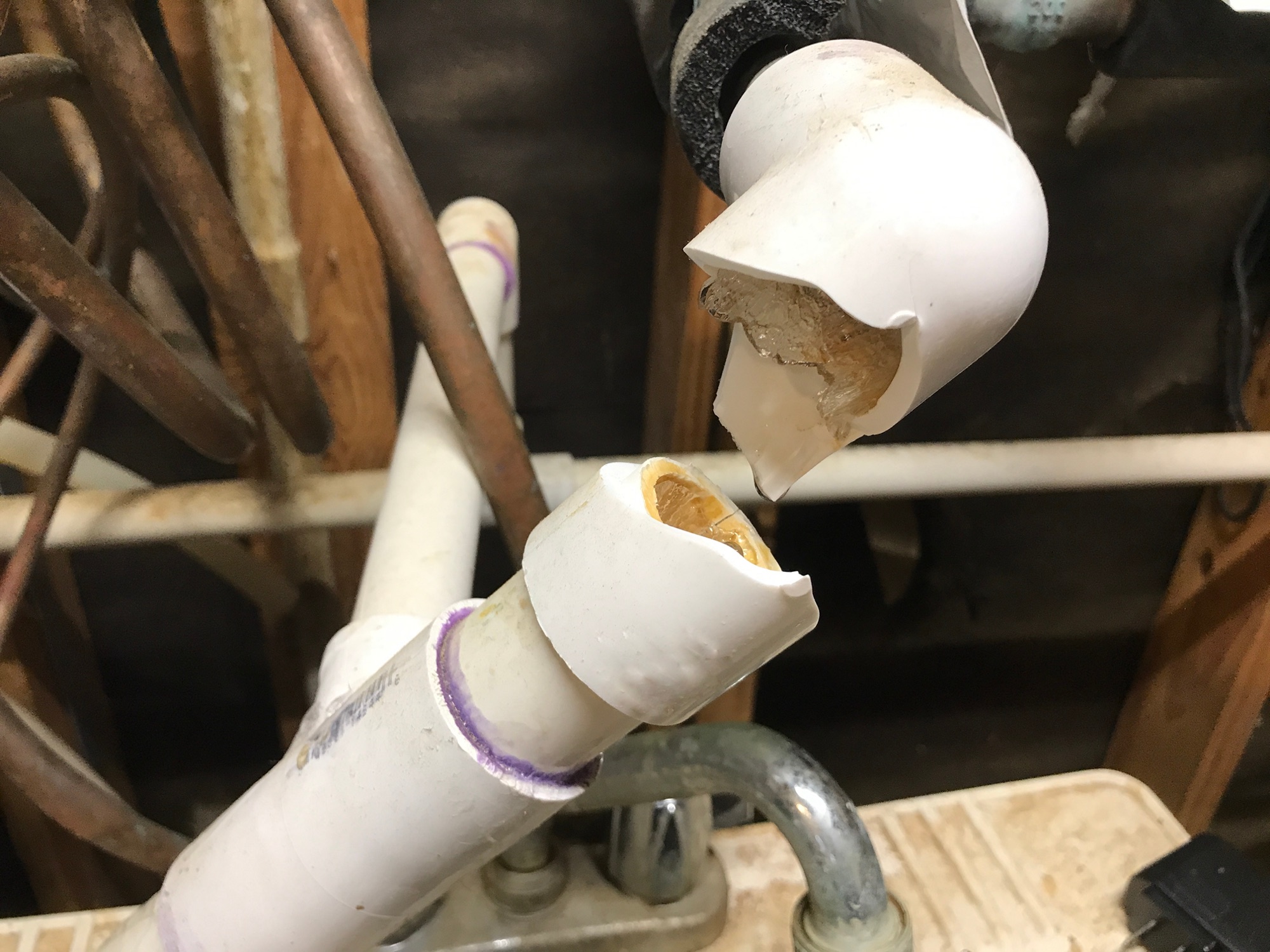
Water expands as it freezes. In a pipe, that expansion builds pressure between the ice and the closed faucet. Sometimes the pipe splits wide open. Often it doesn’t. Instead you get:
- A hairline crack in copper or a split in older PEX or CPVC
- A fitting that shifts or loosens at a joint or elbow
- A compression nut under a sink that backs off slightly
- A cracked valve body on an outdoor spigot or a shutoff valve
While the pipe is frozen, the ice acts like a plug. Nothing leaks. When temperatures climb back above freezing, often in the middle of a weekday when nobody is home, water starts moving again and finds the weak spot.
If the crack is big, you’ll know quickly. If it’s small, it drips into a wall cavity or under a floor where you’ll never see it directly.
Why Slow Leaks Are the Bigger Mold Risk
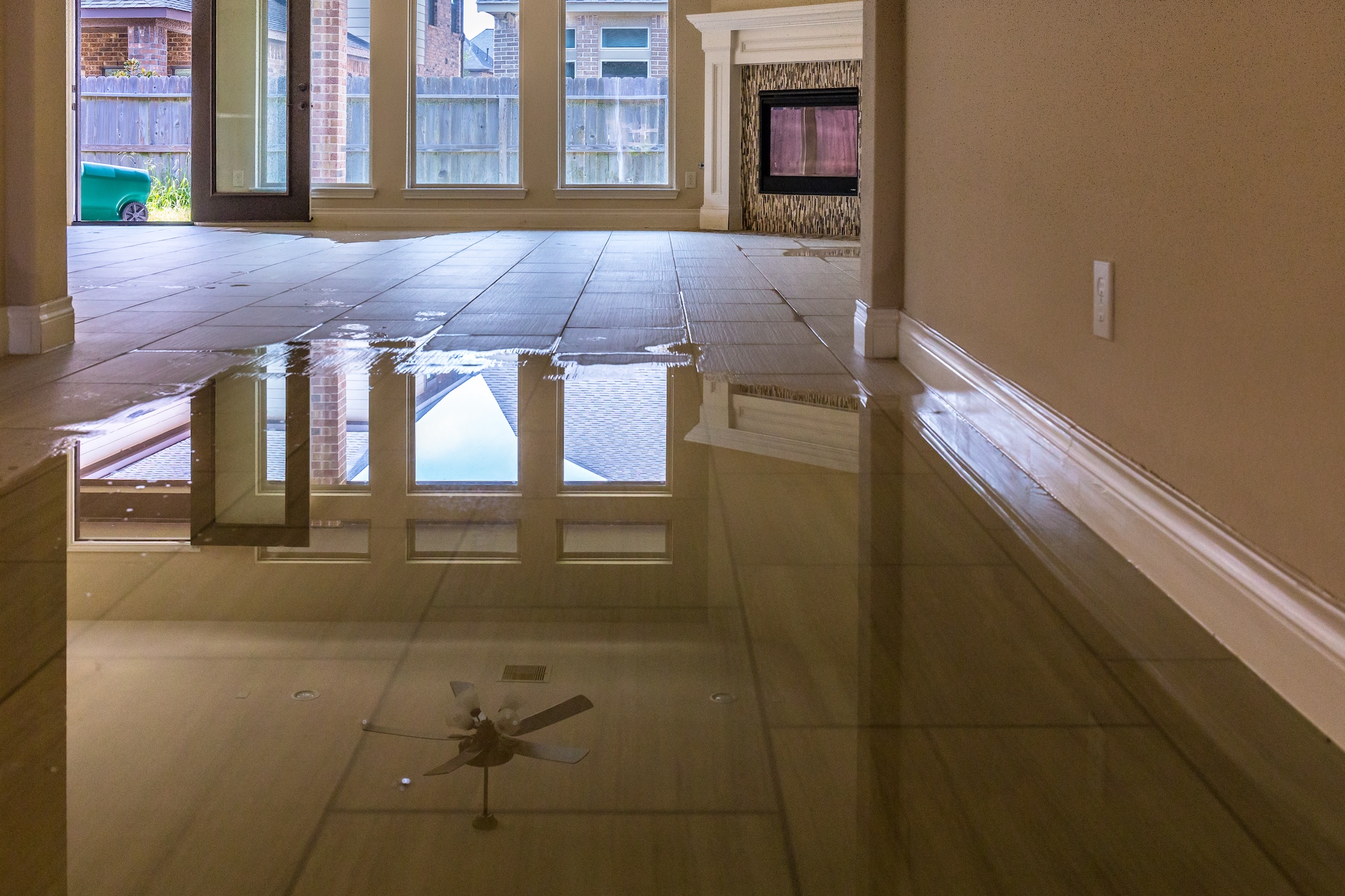
A burst pipe is a disaster, but it’s a loud one. The water gets shut off, someone calls for help, and drying starts right away.
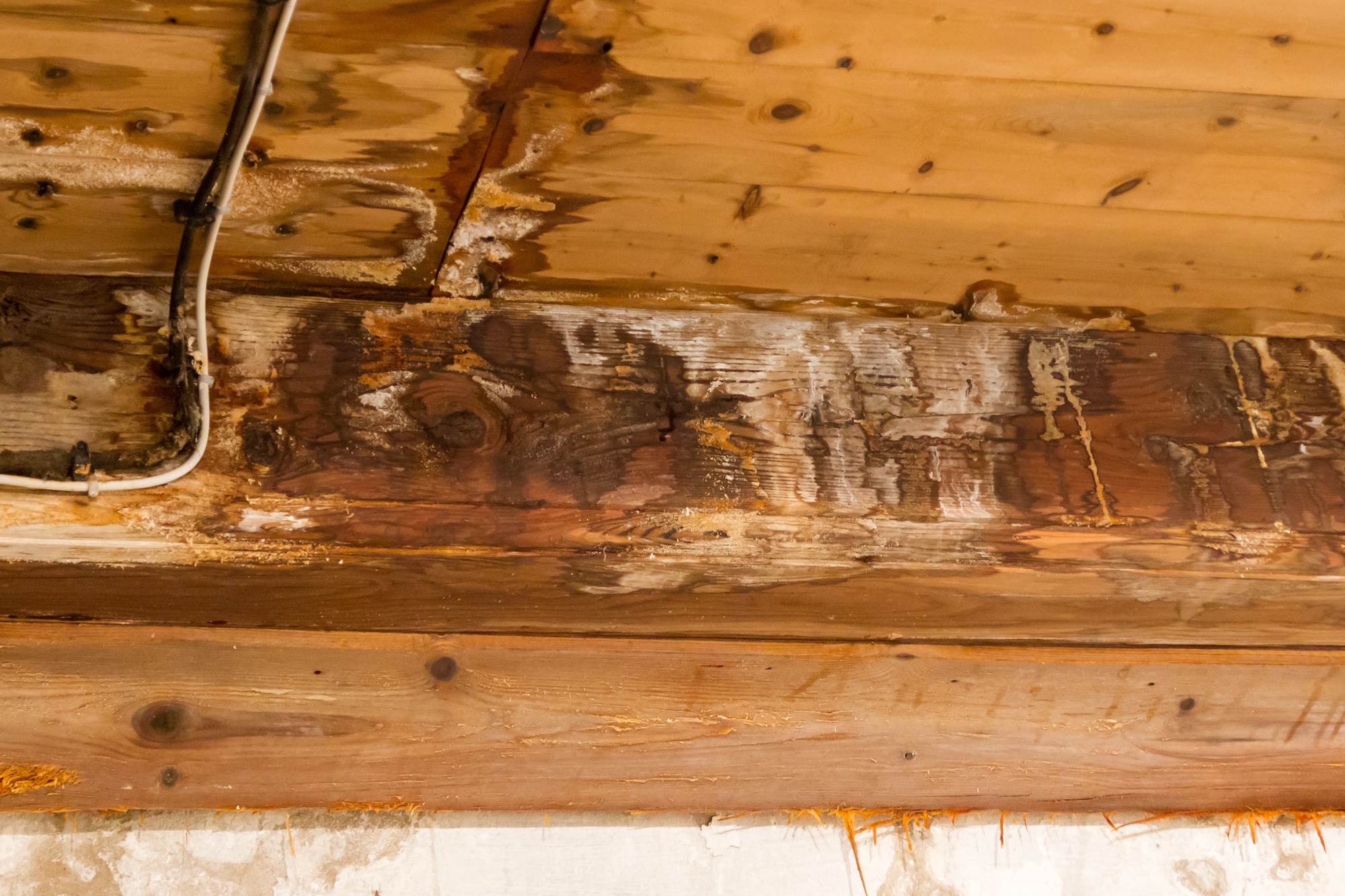
A slow leak doesn’t announce itself. It keeps materials damp for days or weeks, and that’s exactly what mold needs. Material that stays wet past the first day or two is where growth starts, and a wall cavity is close to ideal: dark, still air, paper-faced drywall, and insulation that holds water like a sponge.
There’s also a winter-specific problem. With windows shut and the heat running, that musty smell that might give a leak away in summer can get lost in the dry, warm air of a closed-up house. People tend to notice it in spring, when the damage has had a whole season to spread.
Where Freeze Leaks Hide in DMV Homes
Outdoor Spigots With a Hose Still Attached
This is the most common one we see, and it catches people every year.
Many homes in the region have frost-free sillcocks. The valve seat sits several inches inside the wall, where it stays warm, and the pipe drains out when you close the handle. That only works if water can drain. Leave a hose connected and the water stays trapped in the pipe, freezes, and splits it inside the wall.
You won’t see anything all winter. In spring, someone turns on the hose, and water runs out of the split and into the basement wall or rim joist instead of out the spout. Sometimes it’s obvious. Sometimes it’s a slow trickle every time the hose runs, all summer long.
Kitchen and Bathroom Sinks on Exterior Walls
Cabinets keep heat away from the pipes. A sink on an outside wall, with the cabinet doors shut on a 15°F night, can freeze even in a heated house. A loosened fitting under the sink drips into the cabinet floor and the subfloor below. Check the cabinet base for swelling, staining, or soft particleboard.
Crawl Spaces and Unheated Basements
Vented crawl spaces are common across Northern Virginia and much of Maryland, and on a cold night they’re open to outside air. Supply lines running along the joists are exposed. A drip here soaks the insulation and the subfloor, and nobody goes down to look. (Crawl spaces have a summer moisture problem too. See why vented crawl spaces get wetter in summer.)
Garages and Bonus Rooms
Pipes running through an unheated garage wall, or to a bathroom over the garage, are a common freeze point in newer suburban builds. The rooms above garages are often the coldest in the house.
Older Row Homes and Additions
In older DC and Baltimore row homes, plumbing often runs through back walls and rear additions that were insulated poorly or not at all. Any pipe added during a past renovation, in a spot that wasn’t designed to hold one, is worth a look.
How to Check for a Slow Leak After a Cold Snap
You don’t need any special equipment to do a first pass. After the first hard freeze and any thaw that follows:
- Do a meter test. Turn off every faucet, appliance, and fixture that uses water. Find your water meter and look at the dial or the small leak indicator (often a triangle or star). Wait 15 to 30 minutes without using any water. If it moved, you have a leak somewhere.
- Compare your water bills. A jump in usage over a winter month, with no change in how you use water, is a signal.
- Open every sink cabinet. Look and feel for damp wood, swollen particleboard, staining, or a drip on the trap.
- Look at walls near outdoor spigots from the inside, especially basement walls and rim joists. Stains, peeling paint, or efflorescence (a white, chalky residue) are worth noting.
- Check ceilings under bathrooms and rooms above the garage for new stains or bubbling paint.
- Go into the crawl space if you can do it safely. Look for wet insulation, damp soil under pipes, or anything dripping.
- Use your nose. A new musty smell in one room or one closet, especially near an exterior wall, often comes before anything you can see.
If something turns up, shut off the water to that line or the main and call a plumber for the pipe. Then deal with the moisture. Fixing the pipe stops new water. It doesn’t dry what’s already wet.
What a Professional Leak Check Adds
A meter test tells you water is going somewhere. It doesn’t tell you where, or how far it has spread inside the wall.
That’s what moisture meters and thermal imaging are for. A thermal camera picks up the temperature difference of a damp area behind drywall, and a moisture meter confirms it and maps how far it goes. That map decides what happens next: whether the materials can be dried in place, or whether wet insulation and drywall need to come out before they grow mold. If growth has already started, it’s a remediation job, and the water side gets handled through water damage restoration.
DMV note: The Mid-Atlantic rarely stays frozen for long, and that’s part of the problem. A typical DMV winter swings above and below freezing over and over, sometimes in the same day. Every freeze stresses the pipe, and every thaw gives a cracked one a chance to leak. A single deep freeze in Minneapolis gets everyone’s attention. Ten mild ones in Rockville or Arlington don’t, which is why slow freeze leaks here so often go unnoticed until spring.
Prevention Before the First Hard Freeze
Most freeze damage is avoidable, and the fixes are cheap compared to opening a wall:
- Disconnect every garden hose and drain it. Shut off and drain any outdoor spigot that has an interior shutoff valve.
- Insulate exposed pipes in crawl spaces, garages, and unfinished basements with foam pipe sleeves.
- Seal air leaks near pipes, like gaps around dryer vents, rim joists, and where pipes pass through exterior walls.
- Keep the heat at 55°F or higher, including when you travel.
- On nights in the teens, open cabinet doors on exterior walls and let at-risk faucets drip slowly.
- Know where your main shutoff is before you need it.
- If you’ll be away for a while, consider shutting off the main and draining the lines, or have someone check the house after a cold snap.
The Bottom Line
A burst pipe is a bad day. A slow leak from a cracked fitting can be a bad season, because nobody knows it’s there until the drywall stains or the smell shows up in April.
After the first hard freeze, take ten minutes to do the meter test and open a few cabinets. If something’s off, MoldGone can find where the water went, measure how far it spread, and get it dried or removed before it turns into mold.
Think a cold snap left something behind? Call MoldGone at (240) 970-6533 or schedule an inspection.
Freeze prevention guidance in this article reflects common recommendations from the American Red Cross and the Insurance Institute for Business & Home Safety (IBHS). Mold growth timing references EPA guidance on moisture and mold. This article is general information. Any specific situation requires on-site assessment.