Seeing black spots on window sills or a musty smell in a closet this winter? MoldGone inspects for condensation-driven mold across DC, Maryland, and Northern Virginia. Call (240) 970-6533 or schedule an inspection.
Most people think of mold as a summer problem. The DMV’s humid July and August earn that reputation.
But a lot of the calls we get in January and February are about a different kind of moisture. There’s no leak and no flood. Just water forming on cold surfaces inside the house, night after night, all winter. The window sill that’s always wet in the morning. The closet on the north wall that smells musty. The black spotting behind the dresser that nobody saw until the furniture got moved.
That’s condensation, and in winter it does its damage in the places nobody checks.
The Short Answer
- Condensation happens when warm, moist indoor air hits a surface cold enough to drop it below its dew point. In winter, that means windows, exterior walls, and anywhere insulation is thin.
- The worst spots are the ones with no air movement: closets on exterior walls, corners behind furniture, behind headboards, and under window sills.
- Indoor humidity is the lever you control. EPA recommends keeping indoor relative humidity below 60%, ideally between 30% and 50%. In winter, staying toward the low end of that range matters more.
- A lot of winter moisture is self-inflicted: humidifiers set too high, showers without a working fan, cooking without the hood, and drying laundry indoors.
- Recurring growth in the same cold spot usually points to an insulation gap or air leak in the wall, not just a humidity problem.
How Winter Condensation Works
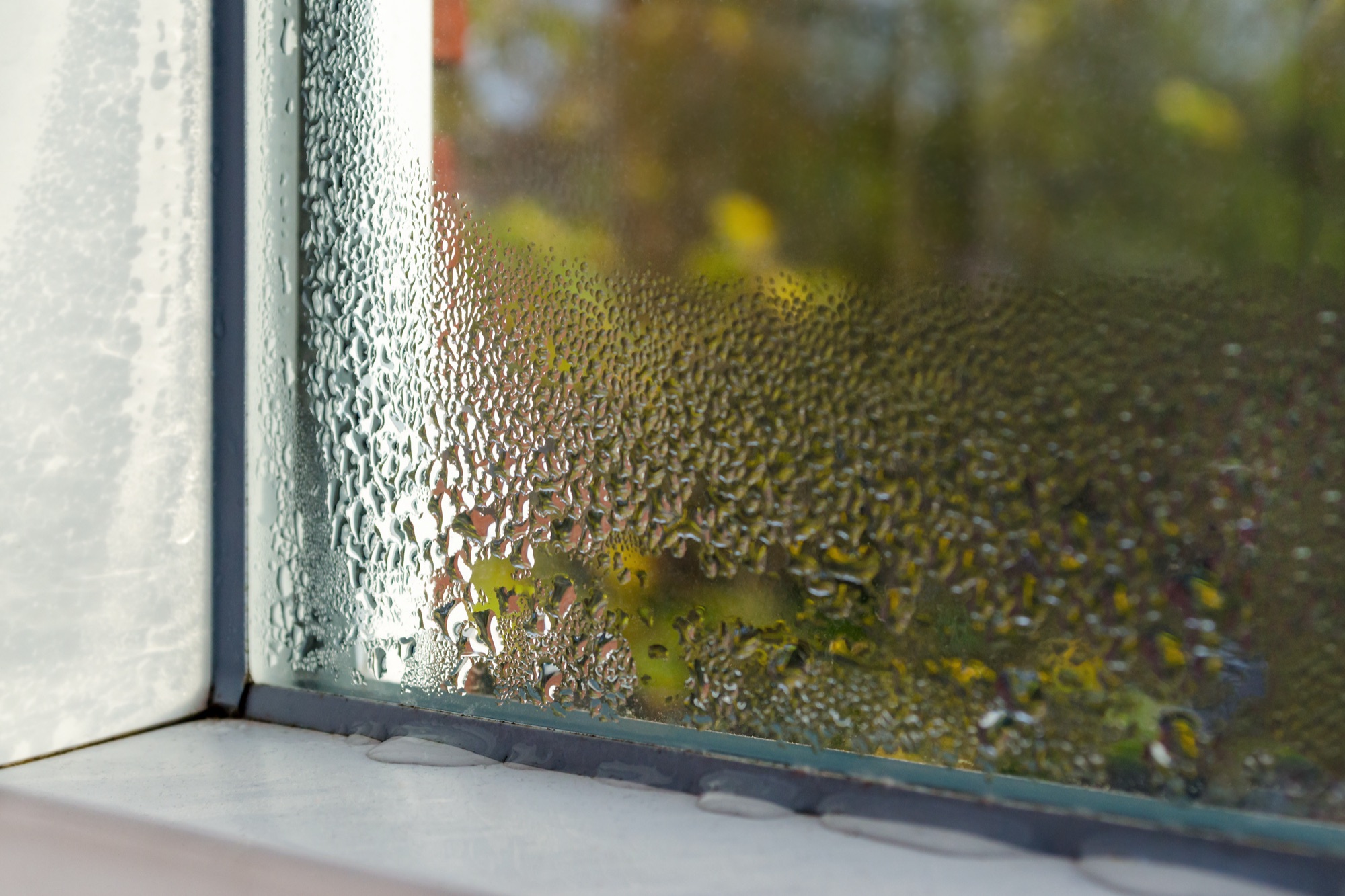
Warm air holds more moisture than cold air. When warm indoor air touches a cold surface, it cools right at that surface. If it cools enough to reach its dew point, the moisture comes out as liquid water.
You see this on a cold glass of water in summer. In winter, the glass is your house. Outside it’s 25°F. The inside face of a single-pane window, an uninsulated wall, or a closet on the north side of the house can be well below room temperature. Every time the indoor air touches it, it leaves a little water behind.
On a window, you see it. On a wall, you usually don’t, until something starts growing.
The Cold Spots to Check
Closets on Exterior Walls
This is the one we find most often. A closet on an outside wall is the perfect setup: the wall is cold, the door is closed so warm air never circulates in, and the space is packed with clothes and boxes that hold moisture and block air from reaching the wall. Look at the back wall, the corners, and the ceiling of the closet, especially low and behind stored items. Leather shoes, bags, and belts often show growth before the wall does.
Behind Furniture on Outside Walls
A dresser, bookcase, or headboard pushed flush against an exterior wall traps a pocket of still air against a cold surface. Condensation forms where you can’t see it, and the first sign is often spotting on the back of the furniture itself. Pulling furniture a few inches off the wall helps a lot.
Window Sills and Frames
Condensation runs down the glass and collects at the bottom. Painted wood sills, the bottom rail of the sash, and the drywall return around the window stay wet every morning. Black spotting in the corners of the frame is usually mold, not dirt.
Upper Corners Where Walls Meet the Ceiling
Insulation in attics often thins out at the edges, near the eaves. That leaves the top corner of an exterior wall colder than the rest of the room. A gray or dark shadow in the upper corner of a bedroom, often in a rough triangle, is a classic sign.
Bathrooms Without a Working Exhaust Fan
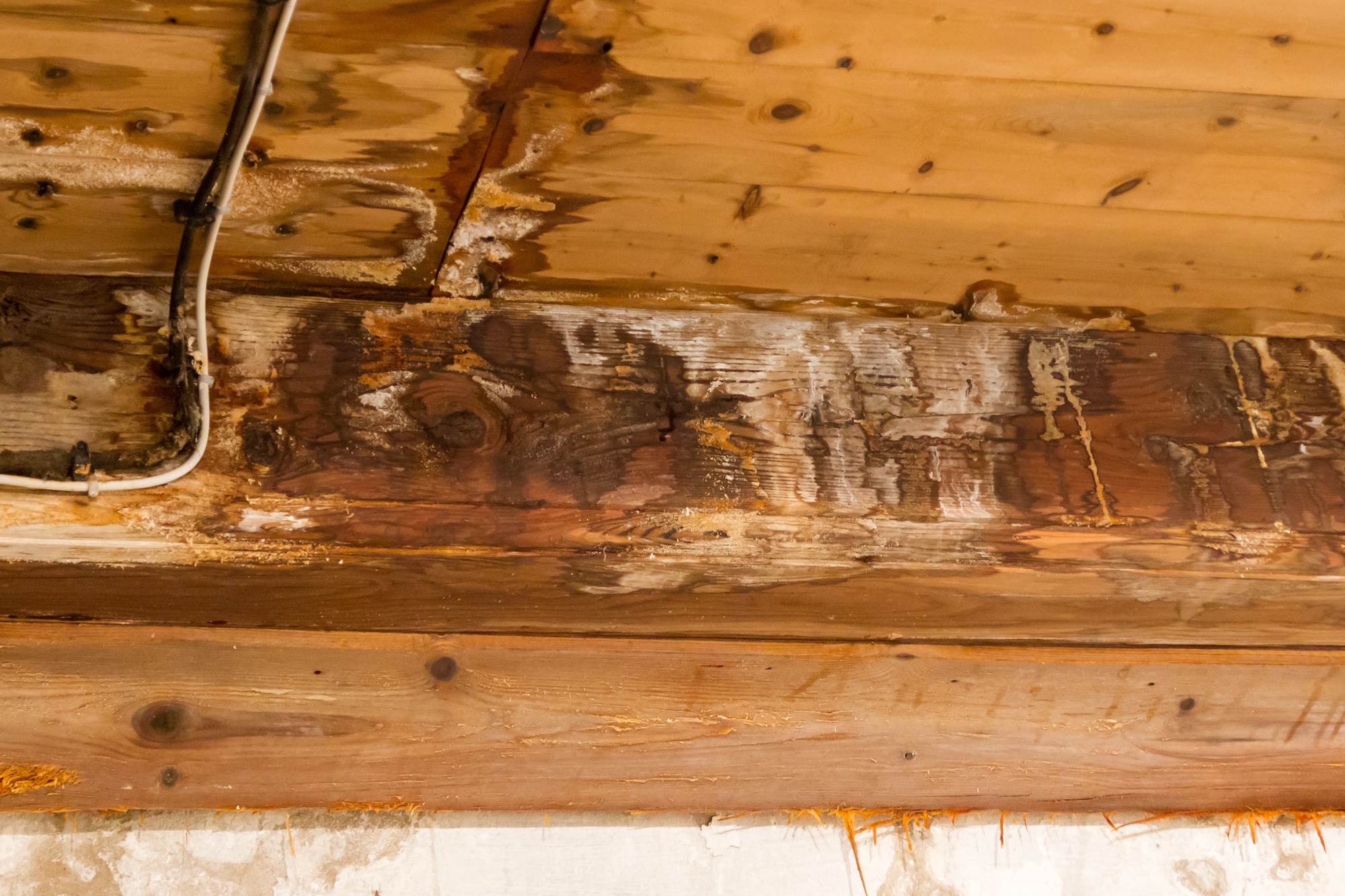
A hot shower puts a lot of water into the air in a few minutes. Without a fan that actually vents outside, all of it lands on the coldest surfaces in the room: the window, the exterior wall, the ceiling. If the fan vents into the attic instead of outside, the moisture ends up on the underside of the roof deck instead. (See mold in your attic.)
Where the Extra Moisture Comes From
A closed-up winter house collects moisture from everyday life. The common sources:
- Humidifiers set too high, or running in a bedroom with the door shut all night
- Showers and baths without a fan, or with the fan shut off too soon
- Cooking, especially boiling water, without running a vented range hood
- Drying laundry indoors on racks
- Unvented gas heaters or fireplaces, which put combustion moisture into the room
- Lots of people in a small space, especially overnight in bedrooms with the door closed
- A damp basement or crawl space feeding moisture up into the living space
None of these is a problem on its own. Combined in a tight, closed house with cold exterior walls, they add up to wet surfaces every morning.
What to Do About It
Get a hygrometer. A basic digital humidity monitor is inexpensive and tells you what you’re actually dealing with. Put one in a bedroom and one in the room with the worst condensation. If you’re regularly seeing readings over 50% on cold days, that’s where to start.
Turn the humidifier down. Many people run humidifiers all winter for dry skin and sinuses. That’s reasonable, but watch the hygrometer. If windows are running with water, the humidity is too high for the house you have.
Run bath and kitchen fans, and leave the bath fan on for 20 to 30 minutes after a shower. If the fan doesn’t seem to pull air, check whether it’s actually vented to the outside.
Move air into cold spaces. Leave closet doors on exterior walls cracked open, or swap solid doors for louvered ones. Pull furniture a few inches off outside walls. Don’t block heating registers.
Wipe down wet window sills in the morning so water doesn’t sit on the wood and drywall.
Small surface spots on non-porous surfaces, like glass, metal, or tile, can be cleaned by the homeowner. Growth on drywall, wood trim, or carpet, or anything larger than a small patch, is different. It often goes deeper than it looks. (Here’s what to do in the first 24 hours.)
When It’s Not Just Humidity
If you’ve brought indoor humidity down and the same corner or closet keeps growing mold every winter, the wall itself is usually the cause. Common findings:
- Missing or settled insulation in the wall cavity, often from older blown-in insulation that slumped over time
- Air leaks that let cold outside air into the wall, around outlets, windows, and the rim joist
- Thermal bridging at framing, concrete, or steel lintels that conduct cold straight through to the interior face
- A hidden leak that looks like condensation but isn’t, especially near windows and in rooms below bathrooms
This is where an inspection is worth it. Thermal imaging on a cold day shows exactly where the wall is colder than it should be, and a moisture meter tells you whether the inside of the wall is wet. If growth is already inside the cavity, cleaning the surface won’t fix it, and it’ll be back. (More on that in mold keeps coming back in the same spot.)
DMV note: The region’s older housing makes winter condensation especially common. Pre-war row homes in DC and Baltimore often have solid masonry exterior walls with plaster applied directly to the brick and little or no insulation, so the inside face of the wall runs cold all winter. Many 1950s and 1960s homes in Montgomery, Prince George’s, and Fairfax counties still have their original thin wall insulation and aluminum or older single-pane windows. And the region’s frequent freeze-thaw swings mean the snow and ice that pile up against walls and on roofs bring their own moisture. (See why mold follows DC snowfalls.)
The Bottom Line
Winter mold doesn’t need a leak. It needs a cold surface, still air, and a house that holds onto moisture, and most DMV homes have all three from December through March.
Keep indoor humidity in check, get air moving into the cold spots, and look behind the things you don’t usually move. If the same spot keeps coming back, MoldGone can inspect and test to find out why, remediate what’s growing, and point you to the fix that keeps it from returning next winter.
Found growth in a closet, corner, or window frame? Call MoldGone at (240) 970-6533 or schedule an inspection.
Indoor humidity recommendations in this article reference EPA’s guidance on moisture control and mold prevention. This article is general information. Any specific situation requires on-site assessment.