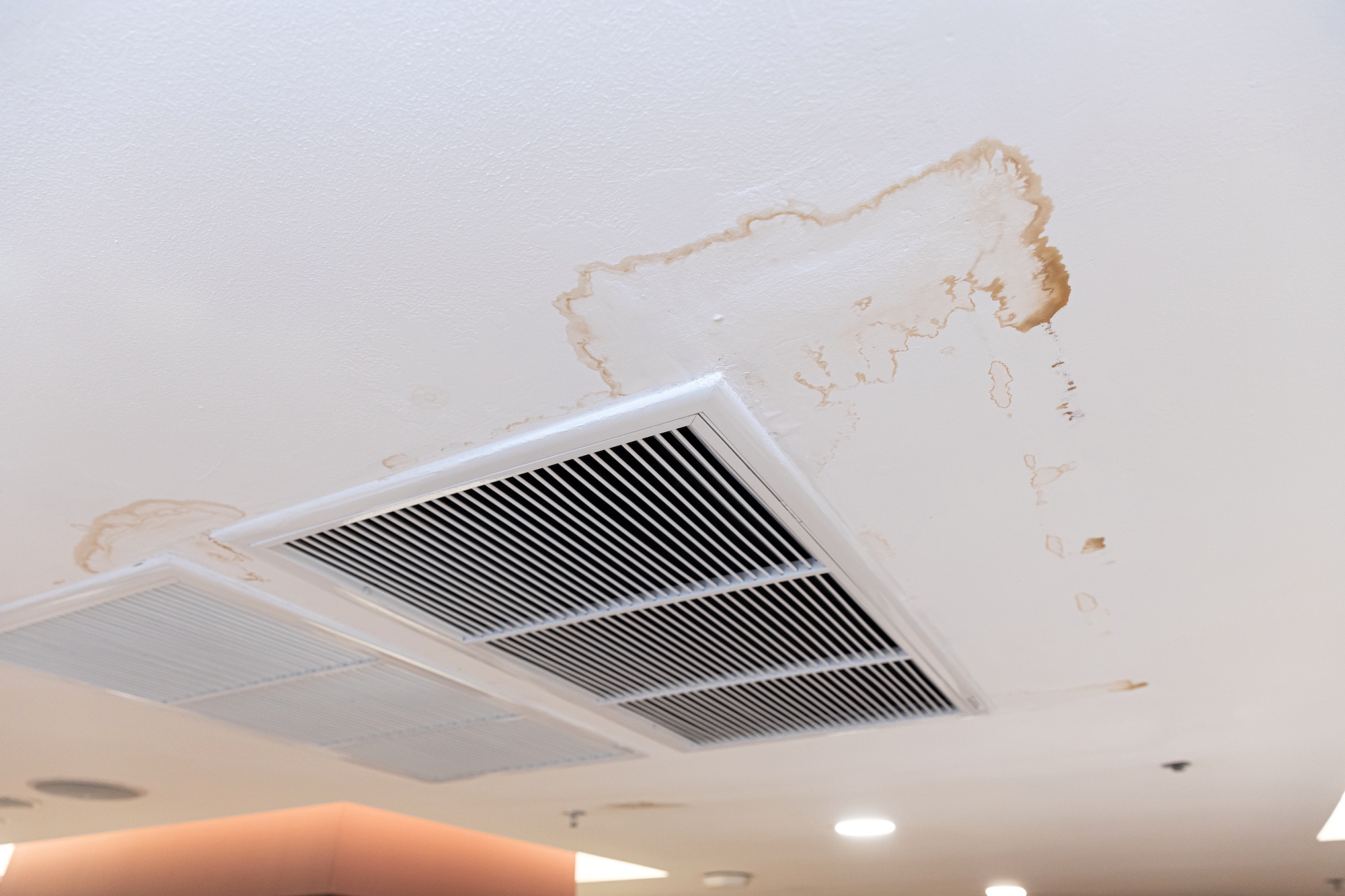
Got a quote that says “encapsulate” and not sure what it means? Encapsulation has a real use and a lot of misuse. MoldGone inspects and remediates across D.C., Baltimore, Maryland, and Virginia. Call (240) 970-6533 or schedule an inspection.
Encapsulation shows up in mold quotes all the time. Sometimes it’s a legitimate finishing step on a well-run remediation. Sometimes it’s the whole job: spray a coating over the growth, call it sealed, and leave.
Homeowners usually can’t tell the difference from the quote. The word sounds technical and thorough. Here’s what encapsulation actually is, when it belongs in a scope, and the red flags that say a quote is using it as a shortcut.
The Short Answer
- Mold encapsulation means applying a coating or sealant over a surface, usually wood framing, to lock in residual staining and particles and help resist future growth.
- It’s a finishing step after removal, not a substitute for it. The IICRC S520 standard treats removing the contamination as the goal, and EPA’s guidance is not to paint or seal over moldy surfaces.
- The legitimate use is narrow: structural wood like attic sheathing or crawl space joists that has already been cleaned and dried, where removing it would mean tearing out the structure.
- The red flags: coating over visible growth, coating drywall or other porous finishes, coating while the moisture source is still active, and no containment or verification.
- “Crawl space encapsulation” is a different thing, a vapor barrier and air-control system. Same word, different job.
What Encapsulation Actually Is
A mold encapsulant is a coating, usually a specialized paint-like product, often with an antimicrobial additive. It gets sprayed or rolled onto a surface after remediation, and it does three things:
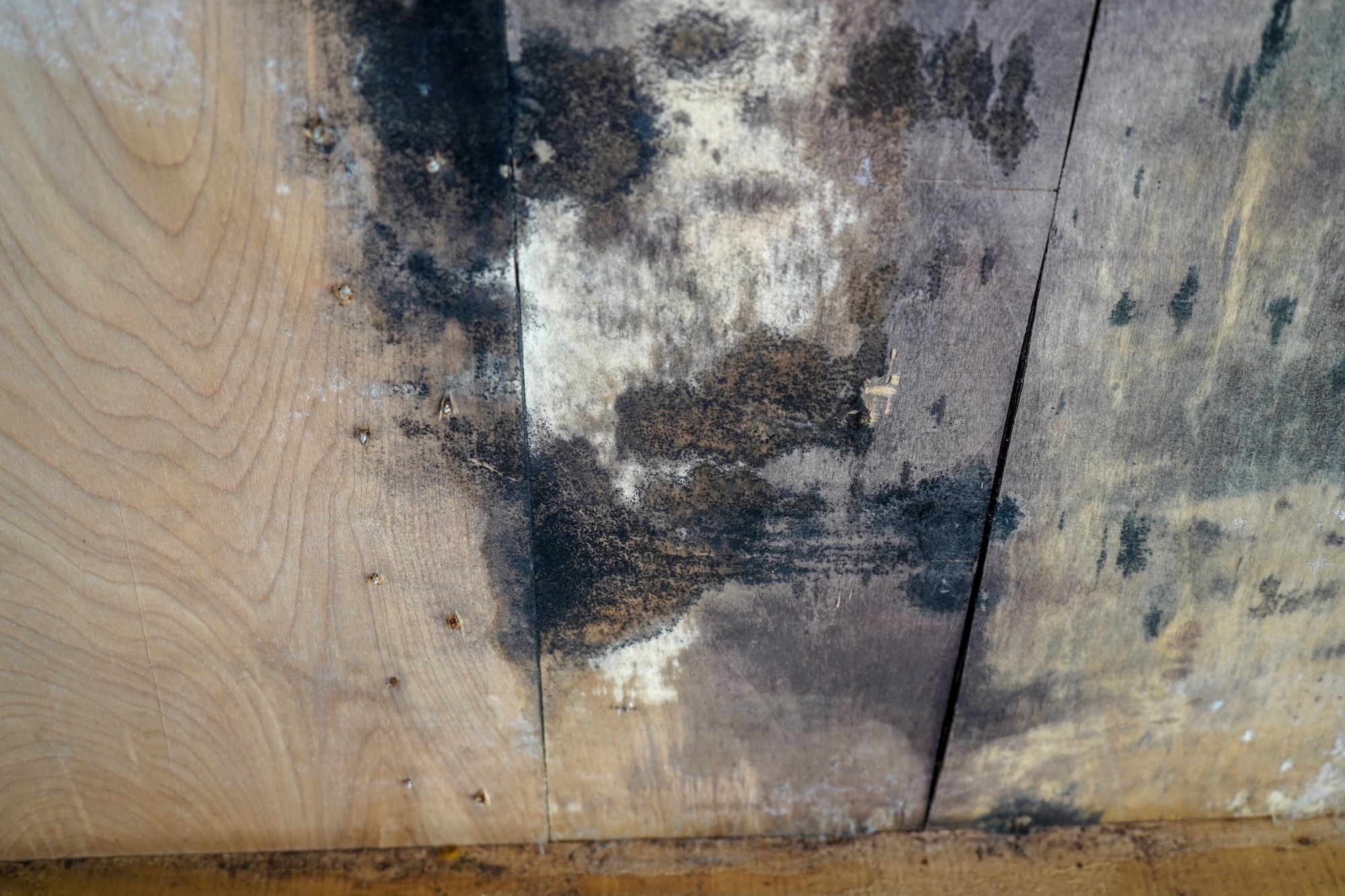
- Locks down residual staining and particles that are left on wood after cleaning. Mold can stain wood below the surface in a way that cleaning doesn’t fully remove, even when the growth itself is gone.
- Adds a protective layer that makes the surface more resistant to future growth if it gets damp again.
- Gives a clean, uniform look so a homeowner or future buyer isn’t looking at stained framing.
None of those involve removing mold. That’s the point. Encapsulation is what happens after removal is done.
Why It Can’t Replace Removal
The standard of care for mold remediation is to physically remove the contamination, then correct the moisture that caused it. The IICRC S520 standard is built around that principle, and it doesn’t treat coatings as a substitute for removal. EPA’s guidance for homeowners is direct: don’t paint or caulk over moldy surfaces. Clean the mold and dry the surface first, and paint applied over mold is likely to peel.
There are practical reasons behind that:
- Coatings don’t kill what’s growing inside porous material. On drywall, insulation, or carpet, growth goes into the material. A coating on the surface doesn’t reach it.
- Active growth under a coating keeps going if moisture is present, and it pushes the coating off. Peeling or blistering a few months later is common.
- Dead mold still matters. Even when growth is inactive, mold particles can still cause allergic and respiratory reactions. Leaving them in place under a thin film isn’t the same as getting them out.
- It hides evidence. Once growth is coated, it’s harder for anyone, including a future buyer’s inspector, to see what was there or whether it’s back.
When It’s Legitimate
Encapsulation makes sense in a specific situation: structural wood that has to stay in place. Think attic roof sheathing and rafters, crawl space joists and subfloor, or wall studs in a gutted room. You can’t reasonably tear out a roof deck or floor framing because of surface mold. So the growth gets removed from the surface instead, and the coating comes after.
A legitimate sequence looks like this:
- The moisture source is found and fixed. Roof leak repaired, attic ventilation corrected, crawl space drainage and humidity addressed.
- The area is contained so spores and debris don’t move into the rest of the house during the work. (Here’s what containment looks like.)
- Contaminated porous materials are removed, such as insulation and drywall.
- Growth is physically removed from the structural wood by HEPA vacuuming, wiping, sanding, or abrasive blasting, depending on the job.
- The wood is verified dry with a moisture meter.
- The coating is applied to the cleaned, dry framing.
- The result is verified before the area is closed back up.
In that sequence, the coating is the last few percent of the work. If a quote puts encapsulation at the center of the job, that’s worth a question.
Legitimate Use vs. Red Flag
Legitimate:
- Applied to structural framing (sheathing, joists, studs) after growth has been physically removed
- Applied after the moisture source is fixed and the wood is verified dry
- Part of a scope that also includes containment, removal of contaminated porous materials, and verification
- Used to seal residual staining that cleaning couldn’t fully remove
Red flag:
- Sprayed over visible, fuzzy growth with no cleaning first
- Applied to drywall, ceiling tiles, insulation, carpet, or other porous finishes that should come out
- Applied while there’s still an active leak, condensation, or high humidity
- The quote is mostly or entirely “fog and encapsulate” with no removal line items
- No containment during the work and no verification afterward
- Presented as “just as good as removal”
The Other “Encapsulation”
You’ll also see crawl space encapsulation, which is a different service that happens to use the same word. It means turning a vented crawl space into a closed one: a heavy vapor barrier over the ground and up the walls, sealed vents, and active dehumidification or conditioning. It’s a moisture-control system for the whole space, and it’s often the right long-term fix for crawl spaces in this region. See our post on why vented crawl spaces get wetter in summer.
The same rule applies to it, though. If there’s mold on the framing, it gets remediated before the crawl space is sealed. Putting a vapor barrier over a moldy crawl space closes the problem in with you.
DMV note: Attics and crawl spaces are where encapsulation comes up most often in this region, because they’re full of structural wood that can’t be removed. Attic sheathing mold is common in D.C., Maryland, and Virginia homes with bath fans venting into the attic instead of outside, or with blocked soffit vents. Winter moisture condenses on the underside of the roof deck and turns into growth by spring. Northern Virginia and Maryland crawl spaces pick up summer condensation on joists and subfloor. In both places, a coating is a reasonable last step once the growth is removed and the moisture source is fixed. It’s never a replacement for either. See our posts on attic mold and recurring mold for more on the moisture side.
Questions to Ask About a Quote
- What’s the moisture source, and how is it being fixed?
- How is growth being physically removed from the wood before any coating goes on?
- Which materials are being removed rather than coated?
- Will the area be contained during the work?
- How will you verify the wood is dry before coating?
- How will you verify the work afterward?
A contractor doing it right will have a clear answer for each one.
The Bottom Line
Encapsulation is a legitimate finishing step for structural wood that has been cleaned, dried, and fixed at the source. It isn’t a way to skip removal, and it doesn’t belong on drywall, insulation, or anything with active growth or active moisture.
MoldGone handles the full sequence across D.C., Baltimore, Maryland, and Virginia: inspection to find the moisture source, contained mold remediation that removes contaminated materials, antimicrobial treatment of remaining surfaces as outlined in the remediation protocol, and reconstruction once the area is verified.
Want a second look at what your quote actually includes? Call MoldGone at (240) 970-6533 or schedule an inspection.
Remediation practices referenced in this article follow the IICRC S520 Standard for Professional Mold Remediation. Guidance on painting over mold references EPA’s homeowner guidance on mold cleanup. This article is general information. Any specific situation requires on-site assessment.